In today’s healthcare environment, communication is no longer a support function. It has become a core driver of patient experience, treatment adherence, clinical efficiency, and brand perception. For clinics and hospitals across India, the ability to communicate clearly, visually, and consistently with patients is shaping how care is understood and how healthcare outcomes are achieved.
For pharma brand managers and healthcare professionals, this shift creates a major opportunity. The modern clinic is not just a place where diagnosis and prescription happen. It is also a place where awareness is built, trust is strengthened, behavior is influenced, and long term engagement begins. This is exactly why the idea of a digital patient communication platform has become so important.
A strong clinic engagement platform can transform the waiting area, consultation flow, and follow up experience into meaningful patient touchpoints. It can simplify doctor patient education, improve patient understanding, and support brands that want to create more relevant and credible healthcare engagement. It can also help clinics modernize their processes through a more connected patient engagement system for clinics.
This guide explains what a digital patient communication platform is, why it matters, what features matter most, how it helps clinics and hospitals grow, and why SynQOL HealthScreen from Indigital Technologies stands out as one of the most effective solutions in this space.
What is a digital patient communication platform
A digital patient communication platform is a technology enabled system designed to improve how healthcare providers communicate with patients before, during, and after the consultation journey. It combines education, awareness, recall, engagement, and workflow support into one connected experience.
Traditionally, patient communication in clinics relied on printed posters, verbal counselling, hand written instructions, and occasional brochures. These methods still have value, but they often lack consistency, personalization, measurability, and visual engagement. In busy clinics and hospitals, many patients leave with only a partial understanding of their condition, treatment plan, lifestyle advice, or next steps.
A modern digital clinic engagement solution addresses this gap by delivering structured, visual, and repeatable communication across key patient touchpoints. It can include health awareness content, queue updates, screening prompts, disease education videos, preventive care messages, digital branding, and support for patient decision making.
For healthcare professionals, this means better communication without increasing consultation burden. For pharma brand managers, it means a stronger and more credible way to stay present in the clinical ecosystem through healthcare engagement technology that adds value rather than interruption.
Why communication matters more than ever in clinics and hospitals
Patients today are exposed to a large volume of health information from social media, search engines, family networks, and messaging platforms. Yet being exposed to information is not the same as understanding it. In fact, misinformation, confusion, and fragmented awareness often create barriers to care.
This is where a healthcare digital engagement tool becomes critical. In the clinic setting, the patient is already in a healthcare mindset. They are waiting, observing, thinking, and often anxious. This is the moment when meaningful communication can have the greatest impact.
- Clear patient communication can help in several ways:
- Patients understand symptoms and risk factors earlier
- Patients become more receptive to screening and preventive care
- Doctors spend less time repeating basic education points
- Hospitals create a more professional and modern patient experience
- Pharma brands gain visibility through value driven engagement
- Clinics improve patient trust and retention
This is why many organizations are now asking how to improve patient engagement in clinics in a way that is practical, scalable, and measurable. The answer increasingly lies in digital platforms that bring together education, communication, and workflow support.
The shift from passive information to active engagement
There is a major difference between placing information in front of patients and truly engaging them. A poster on a wall may be seen. A dynamic communication system can be noticed, understood, remembered, and acted upon.
The best patient engagement system for clinics does not simply display random health messages. It creates relevance. It combines timing, visibility, clarity, and repetition. It can educate patients on diabetes, hypertension, asthma, obesity, women’s health, child health, orthopedics, and more, while also improving the environment of care.
This shift matters because patient behavior is strongly influenced by what they repeatedly see and understand. If clinics want more awareness, more screening participation, better prescription adherence, and stronger follow up behavior, then communication must become continuous and visual.
This is also why patient education platform for clinics is becoming an important category in itself. Education is no longer limited to the doctor’s spoken explanation. It can now be reinforced through digital screens, guided content, and structured communication pathways inside the clinic.
What features define a strong digital patient communication platform
Not every platform offers the same value. Some are limited to display screens. Some focus only on token management. Others provide fragmented communication without clinical relevance. A truly effective platform should integrate multiple dimensions of patient engagement.
Here are the most important elements to look for.
1. Patient education capability
A good system should function as a digital health education platform. It should allow clinics and hospitals to display disease awareness content, preventive healthcare messages, symptom guidance, lifestyle education, and therapy related information in ways patients can understand.
This is especially useful in specialties where awareness gaps are high. Cardiology, diabetes, pulmonology, gynecology, nephrology, dermatology, and orthopedics all benefit from better patient education.
2. Visual communication strength
Patients absorb visuals faster than long written explanations. The platform should support videos, images, animations, and informative health messages. This is where scientific patient education tools and patient education visuals become highly valuable.
When communication is visual, it improves comprehension across language, literacy, and age groups. For pharma marketers, visual education also creates stronger memory and recall.
3. Workflow and queue support
An effective communication platform should also support clinic operations. Queue updates, patient flow information, and waiting area engagement can reduce confusion and improve perceived efficiency. This supports patient experience improvement and contributes to a more positive visit.
4. Branded engagement opportunities
For pharma brand managers, the ideal platform enables meaningful visibility within the clinic. It should not feel intrusive or overly promotional. Instead, brand presence should be integrated with useful health messaging, patient education, and disease awareness. This is where the platform becomes both a clinical asset and a strategic engagement medium.
5. Measurability
Modern healthcare engagement should not be blind. Clinics and sponsors increasingly want to know what was displayed, where engagement occurred, and what kind of reach was possible. This is one reason why digital tools for clinic growth are becoming more attractive than static inputs.
6. Scalability across specialties and locations
A robust clinic engagement platform should work across single doctor clinics, specialty centers, and larger hospital settings. It should adapt to different therapies, patient volumes, and branding requirements without losing consistency.
Why this matters to pharma brand managers
Pharma marketing is evolving from product centric promotion to ecosystem driven engagement. Brand managers today are expected to create meaningful doctor relationships, support patient awareness, and improve treatment continuity in ways that are measurable and credible.
Traditional methods still play a role, but they are often limited by reach, repetition, or shelf life. Visual in clinic platforms offer a different kind of value. They place the brand inside the care environment where patient attention is naturally higher and where education can be tied to therapy relevance.
For a pharma marketer, a digital patient communication platform can help achieve several goals:
- Increase disease awareness among relevant patient audiences
- Support doctor led counselling with quality content
- Strengthen therapy education without overloading the doctor
- Improve brand recall through repeated visual presence
- Create a more premium and differentiated clinic experience
- Support campaigns built around screening, awareness, prevention, and adherence
This is especially relevant in chronic and lifestyle driven therapy areas where the gap between diagnosis and long term management is large. A platform that supports awareness and engagement in the clinic can help close that gap.
Why it matters to healthcare professionals and institutions
Doctors and hospitals are under pressure to do more with less time. Patient volumes are rising, expectations are increasing, and consultation time remains limited. At the same time, patients want clarity, reassurance, and guidance.
A digital clinic engagement solution helps healthcare professionals communicate better without extending the consultation. It creates an informed waiting environment. It reinforces what the doctor explains. It can highlight preventive care and help patients feel that the clinic is modern, caring, and organized.
For hospitals, this contributes to digital transformation for clinics and institutions more broadly. Digital transformation is not only about software for records or billing. It is also about how the patient experiences communication and care delivery in physical spaces.
When patients experience structured education and smoother communication, they are more likely to trust the provider, return for follow up, and recommend the clinic to others. That is why communication platforms also support patient retention for clinics and broader clinic growth strategies.
The connection between communication and clinic growth
Many people think of communication platforms only as awareness tools. In reality, they also influence business performance. Better communication drives better patient confidence. Better patient confidence improves retention. Better retention supports growth.
This is why digital communication is increasingly seen as one of the most effective digital tools for clinic growth.
A clinic that educates patients well often appears more advanced, more trustworthy, and more patient friendly. A waiting area that is informative rather than silent or chaotic creates a better impression. A platform that communicates health advice, queue updates, and awareness messaging creates a more engaging and premium care environment.
- This directly contributes to:
- Higher perceived quality of care
- Improved patient satisfaction
- Better repeat visit potential
- Stronger clinic branding and engagement
- More opportunities for preventive screening and counselling
- Greater differentiation in competitive markets
For healthcare providers looking at smart clinic management system ideas, patient communication should be part of the growth conversation, not treated as a decorative add on.
The role of education in patient decision making
One of the strongest use cases for a patient education platform for clinics is improving patient decision making. Many patients delay tests, ignore symptoms, misunderstand risk factors, or abandon treatment because they lack clarity.
Education that is timely and easy to understand can change this. This is where evidence-based patient engagement becomes so important. When the patient sees simple, clinically relevant, visually clear information in the clinic, they are more likely to ask questions, accept screening, and stay connected to the treatment journey.
This is also where scientific patient education tools become valuable for pharma and providers alike. Education should not feel generic. It should feel medically grounded, patient friendly, and relevant to the therapy area. Whether it is hypertension risk, asthma control, obesity awareness, women’s health, diabetes complications, or lifestyle disease prevention, the communication should support action.
Why SynQOL HealthScreen from Indigital Technologies is the right fit
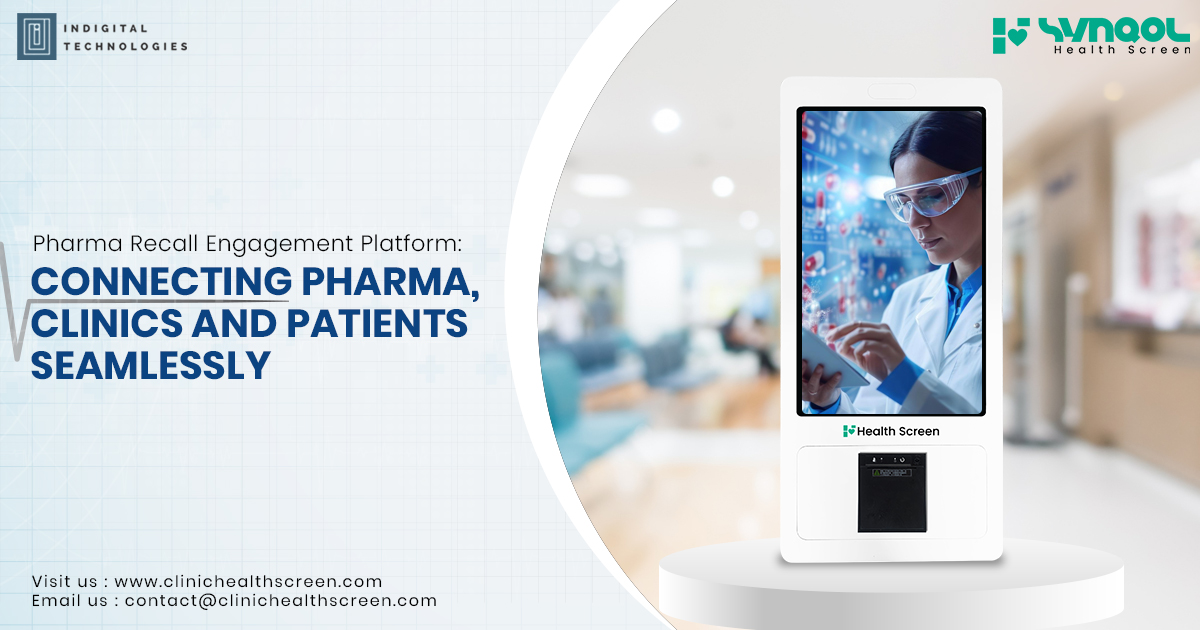
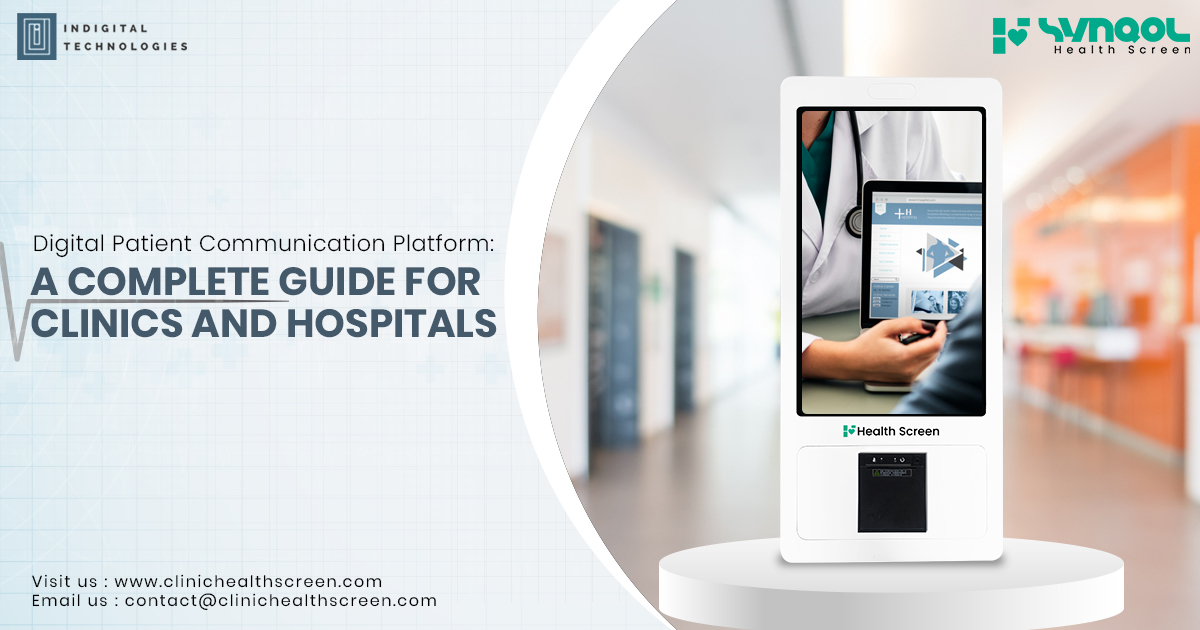
Among the available options in the market, SynQOL HealthScreen from Indigital Technologies stands out because it is not just a display unit and not just a queue tool. It is a complete digital patient communication platform built for the realities of clinics and hospitals.
SynQOL HealthScreen brings together patient awareness, digital communication, engagement, and practical clinic value in one integrated solution. It is designed to support doctors, patients, hospitals, and pharma partners in a way that feels relevant and actionable.
Here is why it deserves attention from both pharma brand managers and healthcare professionals.
It creates meaningful in clinic engagement
SynQOL HealthScreen transforms waiting areas into active communication zones. Instead of patients passively waiting, they are exposed to curated health content, awareness messages, and educational communication that can influence understanding and behavior.
This makes it a highly effective clinic engagement platform for specialties where awareness and compliance matter.
It supports patient education at scale
As a digital health education platform, SynQOL HealthScreen helps deliver informative content that patients can actually absorb. This is especially useful in high volume outpatient settings where the doctor cannot spend extended time on every educational point.
For healthcare professionals, this means better support for counselling. For pharma teams, it means a practical way to place therapy aligned education in front of patients at the point of care.
It enhances clinic branding and professionalism
Clinics using SynQOL HealthScreen appear more modern, more patient focused, and more organized. This contributes to stronger patient experience improvement and more effective clinic branding and engagement.
In competitive urban healthcare markets, that matters. Patients notice the environment they walk into. A digitally enabled communication setup reinforces trust.
It aligns with growth and retention goals
SynQOL HealthScreen is not just about awareness. It also supports patient retention for clinics by making the visit experience more engaging and memorable. Better communication leads to better recall. Better recall supports return visits, stronger doctor connection, and more confidence in the care setting.
It offers value to pharma brand managers
For brand managers, SynQOL HealthScreen provides a powerful healthcare engagement technology channel that combines visibility with patient value. It enables brands to be associated with education, awareness, and care support rather than only promotion.
This makes campaigns feel more credible and more aligned to healthcare outcomes.
It supports real world healthcare communication needs
Indigital Technologies understands the clinic environment deeply. SynQOL HealthScreen has been developed for practical use in Indian healthcare settings where patient diversity, time pressure, and communication gaps are common. This makes it more than a concept. It is a real world solution designed for real clinic challenges.
Use cases where SynQOL HealthScreen creates strong impact
The value of SynQOL HealthScreen becomes even clearer when we look at therapy specific and practical use cases.
In cardiology clinics, it can display awareness on blood pressure, cholesterol, symptoms of heart risk, and the importance of timely evaluation.
In diabetes clinics, it can reinforce preventive care, foot care, glucose monitoring awareness, and adherence related education.
In respiratory clinics, it can communicate about inhaler technique, asthma warning signs, and long term disease control.
In gynecology, it can support education on PCOS, menstrual health, menopause, and preventive screening.
In orthopedics, it can explain posture, bone health, pain awareness, and mobility related topics.
In multispecialty clinics and hospitals, it can serve as a flexible healthcare digital engagement tool that supports broad patient awareness while also creating sponsor opportunities.
How pharma brand managers can use it strategically
Pharma leaders should think beyond one time activations and focus on sustained value. SynQOL HealthScreen can be used as part of a broader engagement framework.
- It can support disease awareness months
- It can reinforce brand aligned education in relevant specialties
- It can complement doctor engagement programs
- It can create visibility in high footfall clinics
- It can support follow through after CME and field campaigns
- It can strengthen premium brand positioning
Most importantly, it allows a brand to participate in the patient journey in a way that feels useful. That is far more powerful than generic visibility alone.
The future of clinic communication
Healthcare will continue moving toward more connected, more visual, and more patient centered care models. Clinics and hospitals that embrace this shift early will create stronger experiences and stronger outcomes.
The future belongs to communication systems that do more than display information. They will educate, engage, organize, and reinforce treatment journeys. They will become part of the infrastructure of care.
For pharma companies, this means choosing channels that create value at the point of care. For healthcare institutions, it means investing in platforms that improve both experience and efficiency. For both, it means recognizing that patient communication is now central to growth, trust, and therapeutic success.
Conclusion
A digital patient communication platform is no longer optional for clinics and hospitals that want to improve patient engagement, strengthen education, and create a more modern care environment. It brings together awareness, visual communication, workflow support, and measurable engagement in one system.
For pharma brand managers, it offers a credible and effective way to support therapy education, brand visibility, and patient understanding. For healthcare professionals, it reduces communication gaps, improves the waiting experience, and strengthens patient trust.
When evaluating a clinic engagement platform, decision makers should look beyond screens and hardware. They should look for a complete patient engagement system for clinics that supports awareness, education, retention, and growth.
This is where SynQOL HealthScreen from Indigital Technologies stands out. It is a practical, scalable, and high impact digital clinic engagement solution that helps clinics and hospitals communicate better while helping pharma brands engage more meaningfully. It functions as a patient education platform for clinics, a digital health education platform, and a strategic healthcare engagement technology solution in one. For organizations asking how to improve patient engagement in clinics, how to modernize patient communication, and how to create stronger healthcare value inside the clinic, SynQOL HealthScreen from Indigital Technologies is a solution worth serious consideration.